When I joined Narrative, a creator programme already existed. A previous marketing team had set it up and done a decent job getting it off the ground, but after the team moved on it lost momentum. The focus had drifted toward chasing trending sounds and paid creator content that felt more like attention-grabbing than genuine brand building. The bones were there, but it lacked depth in what it could really become.
What I saw was an opportunity to rebuild with more intention. Not to throw everything out, but to sharpen the focus and invest in the kind of creator relationships that compound over time. That process took about eighteen months. Most of what I learned came from mistakes I don’t see written about anywhere. People talk about creator programme strategy but much less about the mechanics of actually launching one: what to do in the first 30 days, what to offer when you have no budget, or how to do outreach that doesn’t immediately get deleted.
So here’s the practical version.
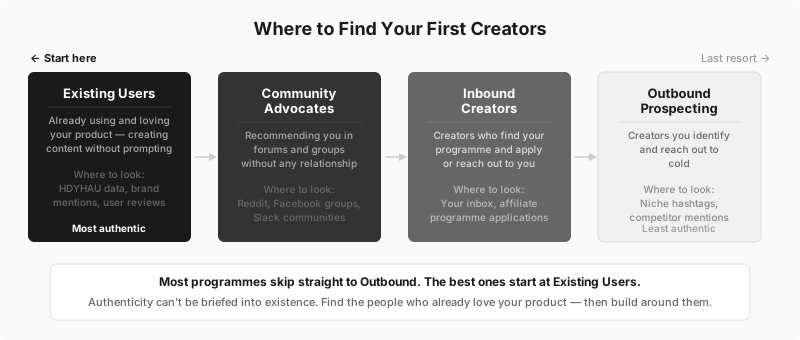
Start with your existing users, not the internet
The default instinct when building a creator programme is to look outward. You search for popular creators in your niche, you look at follower counts, you build a list of people to cold approach. That’s the wrong place to start.
Your best early creators are almost certainly already using your product. They’re posting about it without prompting. They’re recommending it in community forums. They’re mentioning it in tutorials. At Narrative, the earliest traction came from UGC. We’d ask users to submit content, then assess their social profiles to figure out whether there was something worth building on. The creators who were already genuinely using the product didn’t need convincing. They were already doing the work.
Finding them takes some digging. Search for your brand name across social platforms, including Reddit threads, Facebook groups, and niche forums. Check your HDYHAU data if you’ve got it, because creators often show up there. Look at who’s leaving detailed reviews that describe how they actually use the product. These people aren’t just users. They’re proto-ambassadors.
When you find them, don’t immediately pitch a partnership. Start by acknowledging what they’re already doing. A genuine, specific comment from a real person, not a brand account, opens a door. “I saw the workflow video you posted last month. The way you talked through the masking step was exactly how we designed it to work” lands completely differently from “We’d love to partner with you.” One is human. The other is a template.
What to offer before you have a budget
One of the most common excuses for not starting a creator programme is “we don’t have budget yet.” I’d push back on that.
The most meaningful thing you can offer a creator at the early stage usually isn’t money. It’s access, recognition, and insider status. I’ve seen creators choose smaller companies over bigger brands with bigger budgets because the smaller company made them feel like they were actually part of something.
Early product access is enormously valuable to creators who make tutorial and educational content. Being first to publish about a new feature, before any other creator in their niche, is a genuine competitive advantage for them. At Narrative, we’d bring certain ambassador photographers into beta testing of new features months before launch. The content they produced on day one was more authentic than anything we could have commissioned, because they’d genuinely had time to form opinions about it.
A direct line to the product team matters to creators who’ve built an audience around a specific workflow. They care deeply about the product improving. An invitation to share feedback and actually see it actioned is something big brands can’t easily offer, but a startup can.
Community recognition on your owned channels means your audience becomes an extension of theirs. A creator spotlight in your newsletter, a curated feature on your website, a shoutout at an event. For a creator who’s growing their audience, that’s real value.
One thing we discovered at Narrative was that many of our biggest fans would have happily created content for free. They loved the product and wanted to talk about it. But we really didn’t want to take advantage of that goodwill. Even when someone insists they don’t need payment, building a programme on unpaid labour doesn’t sit right and it doesn’t scale well either.
When you do have budget to deploy, people do want to get paid upfront. But it may not be as much as you think, especially if you’re working with smaller creators who are still growing their audience. Commission-based affiliate arrangements are a natural starting point. I’d lean toward percentage-of-revenue models over flat fees per signup. It aligns creator incentives with the metrics you care about, and it means creators benefit as your product and its conversion rates improve over time.
The outreach that actually works
At some point you’ll need to reach out to creators who don’t already know you. This is where most creator programme outreach falls apart.
The template that fills creator inboxes goes something like: “Hi [Name], we’re [Company] and we’d love to partner with you. We think your audience would love our product. Let us know if you’re interested!” Creators who’ve built genuine audiences see through it in seconds. It’s obviously mass outreach. It shows you haven’t looked at their work. It leads with what you want, not what they’d get.
The outreach that works looks different in almost every way.
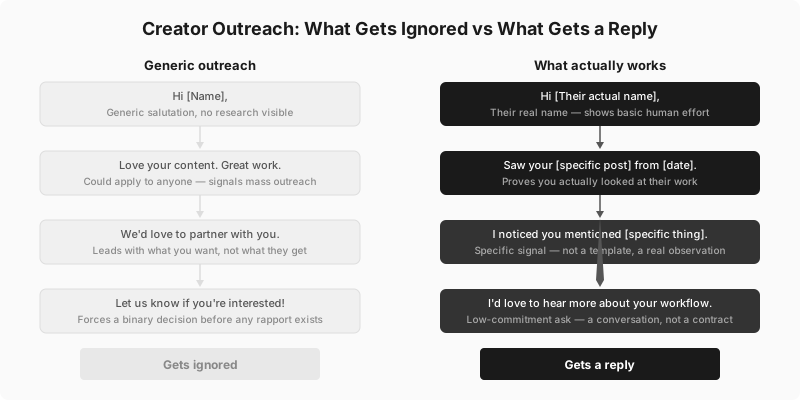
At Narrative, I hired Taylor specifically to run our creator outreach and relationship management. One of the most effective strategies he used was simply DMing creators on Instagram, complimenting their work with something specific and genuine. Not “love your content.” Something that showed he’d actually spent time looking at what they were making. That personal touch consistently outperformed any templated approach.
We also invested in getting Taylor to the US to meet creators face to face. That might sound expensive for a startup, but the relationships he built in person greased the wheels for everything that followed. Creators remembered the conversation. They trusted us more. And those creators started referring other creators to us, which meant the network began to snowball. The best outreach channel we had, after a certain point, was our existing ambassadors making introductions.
The outreach messages that worked best were ones where Taylor could reference something specific about what the creator was doing and explain exactly why he thought there was a genuine fit. Not generic partnership language. A real reason why this particular person made sense. That’s what got replies.
It also helps that outreach comes from a person, not a brand. The response rate was meaningfully higher than anything sent from a generic contact@ alias. People respond to people.
Building from ambassadors to formal partners
The instinct when building a creator programme is to start at the top. Go to the biggest creators in your niche, offer formal paid partnerships, move fast. That almost never works.
The better approach is to build from the bottom up.
Start with ambassadors: real users who love the product and are happy to recommend it in exchange for commission or access benefits. Let that tier grow. Learn from it. Understand which relationships generate genuine activity and which go dormant. Get a feel for what content lands with your target audience.
Over time, the ambassadors who are most engaged, producing the strongest content, and generating real signal become candidates for more formal conversations. By the time you have that conversation, the relationship is already established. The authenticity is proven. You’ve got data on their audience and their ability to produce content that performs.
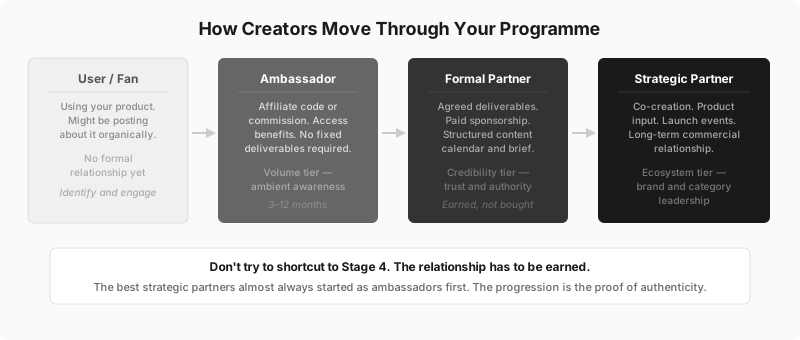
At Narrative, some of our strongest formal partner relationships started with photographers who’d been in the affiliate programme for six to twelve months before we elevated the arrangement. They were already using the product, already posting about it without any prompting, already generating traffic and awareness we could trace. The formal partnership conversation felt natural because it was building on something real.
Compare that to cold deals with big-name creators. Some of those worked. But the hit rate was lower, the ramp-up time was longer, and the content was often less authentic because the relationship had started with a commercial transaction rather than genuine product enthusiasm.
There’s a natural tempo to building creator relationships well. You can’t shortcut it by throwing budget at it. But if you’re patient and systematic, the programme compounds. Twelve months in, you’ll have a portfolio of genuine relationships that no amount of money can replicate quickly.
This is also why I talked in the partner marketing post about starting with product authenticity as a filter. Anyone in your formal partner tier should be a genuine user. We turned people down who had great numbers but weren’t actually part of the workflow we were trying to reach. That discipline is hard to maintain when you’re trying to show growth, but it pays off.
The first 90 days
When you’re launching or rebuilding a creator programme, the first 90 days are about learning, not scaling. Resist the pressure to show big numbers quickly.
Days 1 to 30: Establish the foundation. Define what each tier of your programme offers and expects. Get your HDYHAU tracking in place if it isn’t already. Identify your first 10 to 20 ambassadors from your existing user base. Get a basic onboarding document and brief template together. Not perfect, just functional. You’ll refine both as you learn.
Days 31 to 60: Focus on relationship building. Have real conversations with your early ambassadors. Understand what they care about, what their audiences respond to, and what would make the relationship more valuable for them. This is research as much as it is account management. What you learn in this phase will shape your programme for the next year.
Days 61 to 90: Run your first evaluation. Which ambassadors are actively creating content? Which ones signed up and went quiet? What’s landing with audiences and what isn’t? What does your early HDYHAU data show? Are you seeing any brand search lift around creator activity?
Don’t make big strategic calls at this stage. Creator programmes compound over time. Ninety days isn’t long enough to evaluate whether the channel works. It’s only long enough to understand whether you’re set up to find out.
What you should track in the first 90 days:
- Ambassador activation rate (what proportion are actually creating content vs just signing up)
- HDYHAU responses mentioning creators or community
- Brand search volume correlated with creator activity
- Qualitative feedback from the creators themselves
Don’t expect clean revenue attribution at this point. You’re building the foundation. The revenue data comes later, and when it does, it’ll make a lot more sense when you’ve got the full-funnel measurement infrastructure I described in the measurement post.
If you want a simple way to start putting numbers around that, I built a creator marketing ROI calculator that combines direct creator revenue with HDYHAU-influenced signups.
What scaling actually looks like
“Scaling” a creator programme doesn’t mean finding 10 times more creators. It means going deeper with the ones that are working.
The most common mistake when companies decide to scale is adding volume. More ambassadors, more platforms, more formats. That spreads your attention too thin, degrades the quality of relationships, and usually produces worse results than a smaller programme with genuine depth.
Real scale means building systems so the programme can grow without degrading. Proper onboarding so every new creator gets a consistent introduction. Clear pathways for ambassadors to progress into more formal involvement. Feedback loops so you know what’s working. And a measurement stack that gives you signal across the full funnel.
At Narrative, the point where things really started to compound was when we had both volume and depth simultaneously. A wide layer of ambassadors creating ambient awareness across the photography community, and a smaller set of formal partners creating high-quality content that built credibility. Those two layers reinforced each other. The formal partners made the brand something worth recommending. The ambassadors spread that recommendation at scale. Neither worked as well in isolation.
This is exactly the compounding dynamic I wrote about in the ecosystem marketing guide. Creator programmes, when structured well, operate the same way. Each layer strengthens the others over time.
The thing nobody writes about
Building a creator programme is as much a community management job as it is a marketing function. The people who do it best genuinely care about the creators they work with.
At Narrative, Taylor was the person forming these relationships day to day. I hired him specifically for this because the role needs someone who can balance commercial outcomes with genuine human connection. If you treat it purely as a distribution channel, where creators are media to be bought, they’ll feel it. Taylor made sure our creator relationships never felt purely transactional. He followed their work, understood their goals, and brought their feedback back to the product team. That’s what makes the authenticity show up in their content. You can’t brief your way to it. It either exists or it doesn’t.
The measurement matters. The strategy matters. But the thing underneath all of it, the thing that makes creator marketing actually work over time, is trust. Get that right and everything else follows.
The part of this I find hardest is the operational burden. The tracking, the brief management, the attribution stitching, the reporting. All of that sits on the person running these programmes and it squeezes time away from the actual relationship work. It’s exactly the problem I’m building something to solve. More on that soon.